For parents
What is academic debate?
If you've heard about school debate and aren't quite sure what it is, this guide is for you. Here's everything a parent needs to know before signing their child up.
The activity
Academic debate, explained.
Academic debate is an educational activity where students research a current topic, build solid arguments, and present them in front of others. It's not just talking — it's learning to listen, to reason, and to defend ideas with evidence.
One important thing to know: academic debate is not a fight or an argument. It all happens inside a structured, respectful format — there are rules, speaking turns, and a focus on the arguments, not the people. Above all, it's a learning tool.
Through debate, young people build skills that last a lifetime: critical thinking, public speaking, confidence in front of a crowd, active listening, and research habits. These skills don't just serve students in school — they serve them in every important conversation they'll ever have.
Over the long term, debate prepares young people for college, the workplace, and civic participation. It helps them understand the world from multiple perspectives and express their ideas clearly and respectfully — something every employer, teacher, and community values.
The format
How does a debate work?
- 1
The topic is announced
The debate topic is shared in advance — for example, a question about the environment, technology, or rights. Everyone starts from the same place.
- 2
Students research and prepare
Each team looks up information, weighs different points of view, and builds their arguments. They learn to read reliable sources and organize their ideas.
- 3
Teams present their arguments
During the debate, each team lays out their position clearly and in order, with timed turns for each speaker.
- 4
The other team responds
Students listen carefully and respond to the other side's arguments. They practice thinking quickly and staying calm under pressure.
- 5
Everyone learns to think on their feet
By the end, both the debaters and the audience walk away with new ideas, more vocabulary, and more confidence to speak up.
What makes us different
Why we run debate in Spanish.
Young people learn faster and build more confidence when they practice in the language they think and feel in. Running debate in Spanish lets students express themselves naturally from day one — without the language barrier that often holds bilingual students back in English-language programs.
The skills built in Spanish — argumentation, active listening, organizing ideas — transfer directly to English and any other language. It's not about choosing one; it's about strengthening both.
And there's something else: debating in Spanish is also an act of cultural pride. It shows young people that their language and their heritage are powerful tools for their success.
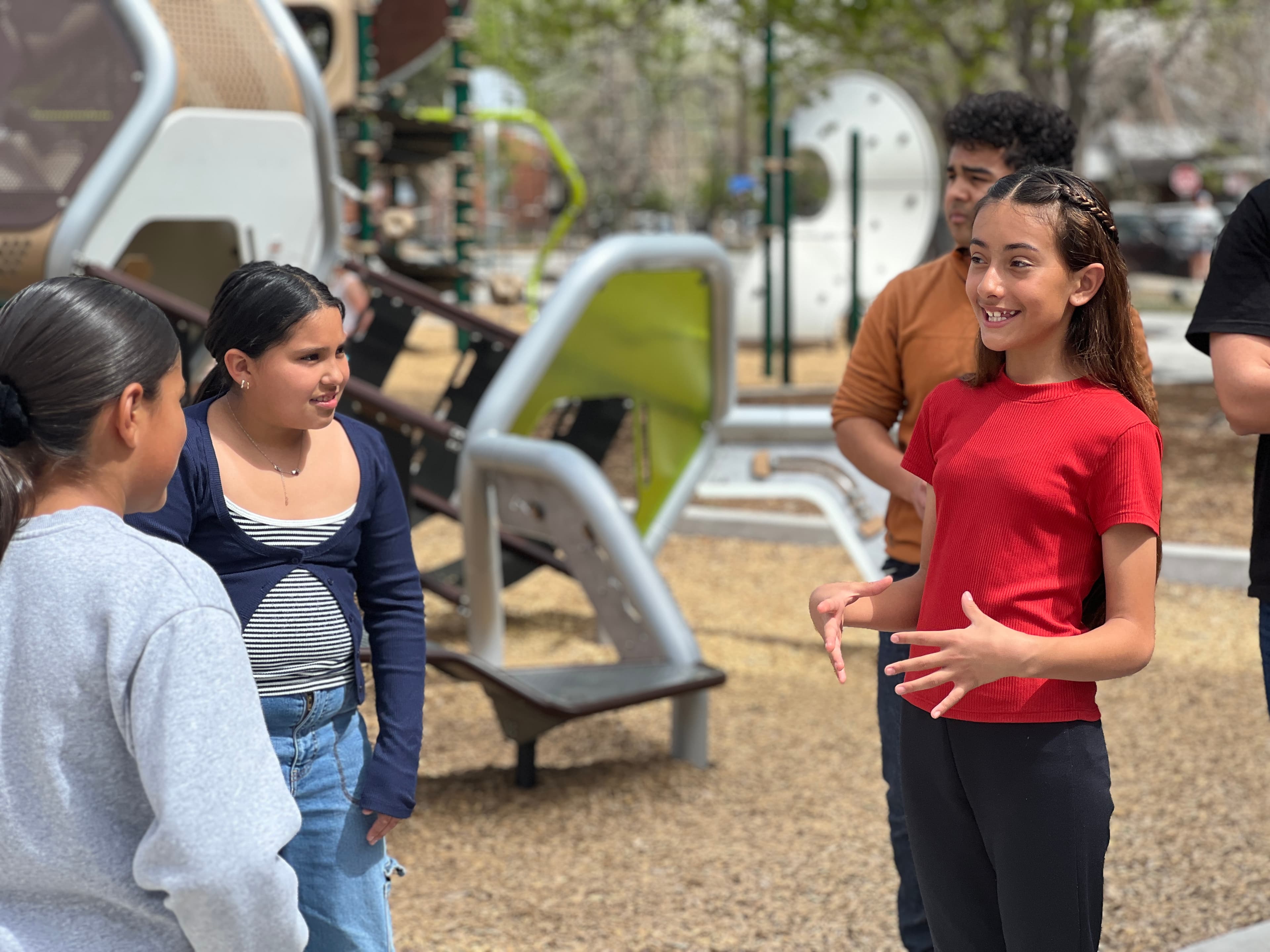
A participant defends her ideas at an SSDN workshop.
Backed by research
What the research shows.
Improves school performance
Research in secondary schools shows that students who take part in debate programs score higher in reading and writing than their peers.
Builds lasting confidence
Studies on youth public speaking find that young people who debate report higher self-esteem and less social anxiety — benefits that stick over the years.
Strengthens critical thinking
Debate trains students to evaluate evidence, spot fallacies, and build logical arguments — key skills for success in college and work.
Take the first step
Want your child to learn debate?
SSDN runs free debate and public speaking workshops in Spanish for students in 5th–8th grade in Denver. No cost, no prior experience needed — just a willingness to learn. Register today or learn more about the workshops.